Source eco-friendly y2k joggers and hoodie set for streetwear, gym, and casual wear
Explore 30 listings for eco-friendly y2k joggers and hoodie set options featuring cotton fabrics, custom logos, and various styles. Buyers can compare specifications like sleeve length, closure types, and seasonal designs to find suitable suppliers for bulk orders.
Key considerations
Products List


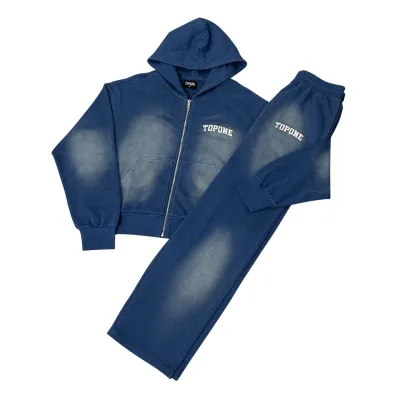
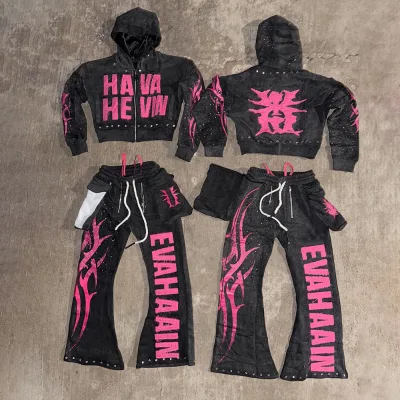
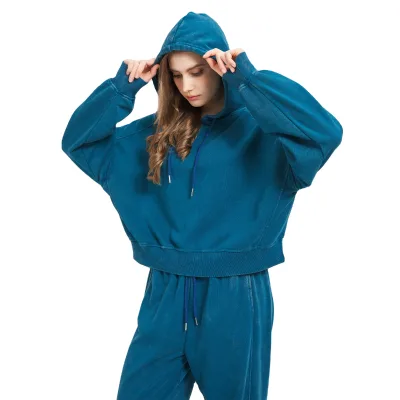


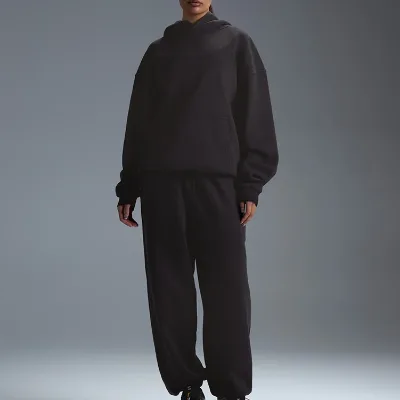


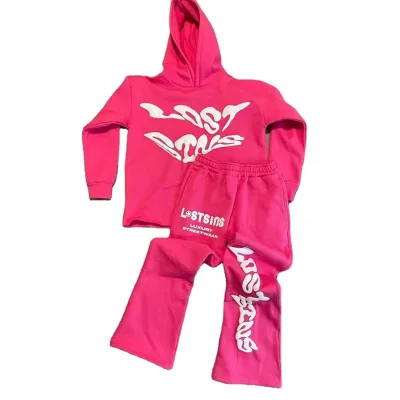





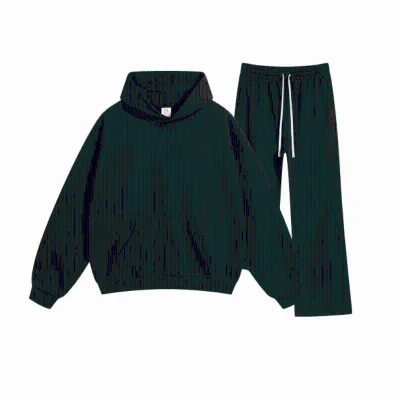


Comprehensive Sourcing Guide
Strategic Sourcing Guide for Eco-Friendly Y2K Joggers and Hoodie Sets
The global demand for streetwear that blends retro aesthetics with modern sustainability has elevated the "Y2K joggers and hoodie set" into a high-priority category for B2B buyers. This specific style, characterized by its baggy silhouettes, bold graphics, and functional design, requires a nuanced sourcing strategy. Buyers must navigate a complex landscape where material composition, production capabilities, and aesthetic customization intersect. The following guide provides a disciplined approach to sourcing these items, grounded in verified product attributes and industry standards, ensuring that procurement decisions are based on factual data rather than marketing speculation.
Defining Technical Specifications and Material Composition
The foundation of a successful procurement strategy lies in a precise understanding of the technical specifications that define the product. For the core keyword of eco-friendly Y2K joggers and hoodie sets, the material composition is the primary differentiator. Verified data indicates that Cotton is a dominant material, with specific listings confirming 100% Cotton content. This is a critical verification point for buyers seeking authentic eco-friendly claims, as natural fibers generally offer better biodegradability compared to synthetic blends.
Beyond the base fabric, the Fabric Weight is a decisive factor in the garment's drape and seasonal suitability. High-quality Y2K sets often utilize heavier fabrics to achieve the desired structured, oversized look. Specific product observations note a Fabric Weight of 300 Grams, which aligns with the "Fleece" thickness specification often found in winter-ready sets. This weight ensures the garment retains its shape while providing necessary warmth.
The construction details further define the Y2K aesthetic. The Hood Type is frequently observed as Fixed, providing a classic, non-adjustable silhouette that is characteristic of the era's streetwear. However, functional elements like the Waist Design often feature a Drawstring belt, allowing for a customizable fit despite the fixed hood. The Closure Type varies, with Zipper and Drawstring options available, influencing the ease of wear and the overall style profile. Additionally, the Sleeve Length is predominantly Long Sleeve, and the Length of the joggers can range from Short to Full Length, offering buyers a spectrum of options to match specific market trends.
Compliance, Certification, and Ethical Verification
In the realm of eco-friendly apparel, compliance is not merely a regulatory hurdle but a core component of brand value. Buyers must rigorously verify the ethical and environmental credentials of potential suppliers. While general background knowledge often references standards like ISO 9001 or certifications such as BSCI, these should be treated as benchmarks for verification rather than guaranteed attributes of every listed product.
When evaluating a supplier, the buyer must explicitly request proof of compliance. The presence of a Needle detection: Yes attribute is a standard quality control measure in garment manufacturing, ensuring that no metal fragments remain in the finished product. This is a non-negotiable safety requirement for any apparel sold to international markets. Furthermore, the Supply Type is frequently listed as Oem Service, indicating that the supplier is equipped to handle custom production runs. This capability is essential for brands looking to implement their own eco-friendly initiatives, such as using organic cotton or sustainable dyes, which may not be standard in off-the-shelf inventory.
Buyers should also scrutinize the Production Origin. The majority of verified data points to China as the place of origin, with specific regions like Guangdong emerging as manufacturing hubs. While this location offers robust supply chains, it necessitates a deeper dive into local labor practices and environmental regulations. The "eco-friendly" claim must be substantiated by the supplier's specific manufacturing processes, including water usage in dyeing and waste management protocols. Without concrete documentation, the term "eco-friendly" remains a marketing assertion rather than a verified fact.
Cost Drivers and Pricing Dynamics
Understanding the cost structure of Y2K joggers and hoodie sets is vital for maintaining healthy profit margins. The observed listed price range in the market spans from 0.5 to 70 USD, a wide variance that reflects differences in material quality, customization complexity, and order volume. The lower end of this spectrum typically corresponds to basic cotton blends with minimal customization, while the higher end reflects premium 100% cotton, complex printing techniques, and specialized packaging.
Customization is a primary cost driver. The availability of Customized logos and Custom brand names allows for brand differentiation but increases the unit cost due to setup fees and lower economies of scale. The Logo position can vary, with options including the Front, back, and Left Sleeve. Each additional print location adds to the production time and cost. Furthermore, the Printing Methods play a significant role. Digital Print and Printed techniques are common, but the choice between them affects the final price and the durability of the design.
The MOQ (Minimum Order Quantity) also heavily influences the per-unit cost. The observed MOQ range is 1 to 500 units. Buyers placing orders at the lower end of this spectrum (e.g., 1-50 units) will face higher per-unit costs but benefit from reduced inventory risk. Conversely, orders near the upper limit (e.g., 500 units) typically secure better pricing but require a larger capital outlay. The Available Quantity of 1000pcs for certain models suggests that some suppliers have the capacity for larger bulk orders, which can be leveraged for negotiation.
Aesthetic Trends and Functional Applications
The Y2K aesthetic is defined by specific visual and functional elements that distinguish it from other streetwear styles. The Style is explicitly identified as Y2K, often paired with a Pattern Type described as Print or Other. This allows for a wide array of graphic designs, from retro logos to abstract patterns, which are central to the product's appeal. The Color options, such as Blue, are just one part of a broader palette that buyers should explore to match current fashion cycles.
Functionality is equally important in the Y2K design language. The Fit Type is generally Regular, providing a comfortable, non-restrictive feel that aligns with the casual nature of the style. The inclusion of Side pockets is a standard feature, enhancing the utility of the joggers. The Season for these products is predominantly Winter, driven by the use of thicker fabrics like fleece and the layering potential of hoodies. However, the Feature list often includes Breathable, Eco-Friendly, and Windproof attributes, suggesting that modern iterations of these sets are designed for versatility across different weather conditions.
The Design aspect often incorporates a 2 in 1 concept, where the hoodie and joggers are sold as a cohesive set. This bundling strategy simplifies the purchasing process for retailers and end consumers alike. The Gender specification is primarily Men, though the Age Group is listed as Adults, indicating that these styles are broadly applicable across the adult demographic. The Selling Units are typically Single item, meaning the set is packaged and sold as one unit, which simplifies logistics and inventory management.
Supplier Evaluation and Production Capabilities
Selecting the right supplier requires a detailed assessment of their technical capabilities and operational flexibility. The prod_model numbers, such as WY-R35, WY-C14, MS-36, WY-R11, and WY-Z22, serve as unique identifiers for specific product lines. These models often dictate the available Size options, which typically range from M to 3 XL, covering a broad spectrum of body types.
A critical evaluation point is the Lead Time. Verified data indicates a 7 days sample order lead time is supported by some suppliers. This is a significant advantage for buyers who need to validate product quality before committing to large orders. However, buyers must clarify the lead time for bulk production, as this can vary significantly based on the complexity of the Customization and the current production load.
The Product Packing is another area requiring attention. The standard Box packaging is noted, but buyers should verify if this meets their branding requirements. The Single package size of 35X25X6 cm and a Single gross weight of 1.200 kg are essential data points for calculating shipping costs and optimizing container utilization. These dimensions suggest a compact packaging solution that minimizes shipping volume while protecting the garment.
Quality Control and Long-Term Procurement Strategy
Ensuring consistent quality is paramount in the B2B apparel sector. The Needle detection: Yes attribute highlights a baseline safety standard, but buyers should implement a more comprehensive quality control (QC) protocol. This includes verifying the Fabric consistency, ensuring that the 100% Cotton claim is accurate through lab testing if necessary, and checking the durability of the Printed designs.
The Standard for the product packaging is listed as 204040cm, which likely refers to the dimensions of the carton or a specific packaging standard. Buyers must ensure that this aligns with their logistics requirements and that the prod_packing method protects the garments from moisture and damage during transit.
For long-term procurement, building a relationship with suppliers who offer Oem Service is crucial. This allows for continuous product iteration and adaptation to changing market trends. The Brand Name: Custom attribute indicates that suppliers are willing to white-label products, which is essential for brands looking to establish their own identity. However, buyers must maintain strict control over the design and branding assets to prevent unauthorized use.
Comparative Analysis of Product Attributes
To facilitate decision-making, the following table summarizes key attributes observed in the market for eco-friendly Y2K joggers and hoodie sets. This comparison highlights the variability in specifications and helps buyers identify the most suitable options for their specific needs.
| Attribute | Observation A | Observation B | Observation C |
|---|---|---|---|
| Material | Cotton | 100% Cotton | Various Option |
| Fabric Weight | 300 Grams | Fleece Thickness | Standard |
| Hood Type | Fixed | Fixed | Adjustable (Verify) |
| Closure Type | Zipper | Drawstring | Zipper/Drawstring |
| Sleeve Length | Long Sleeve | Long Sleeve | Full Length |
| Pattern Type | Other | ||
| Customization | Available | Customized Logo | OEM Service |
| Origin | China | Guangdong, China | China |
| MOQ Range | 1 - 500 | 1 - 500 | Variable |
| Sample Lead Time | 7 Days | Support | Variable |
This table underscores the importance of verifying specific attributes before placing an order. While Cotton and 100% Cotton are common, the "Various Option" category suggests that buyers must explicitly confirm the material composition to ensure it meets their eco-friendly criteria. Similarly, the variation in Closure Type and Hood Type requires clear communication with the supplier to avoid receiving products that do not match the intended design.
Final Procurement Considerations
Sourcing eco-friendly Y2K joggers and hoodie sets requires a balance of aesthetic appreciation and rigorous due diligence. Buyers must move beyond surface-level marketing claims and focus on the tangible specifications that define the product. By verifying material composition, understanding cost drivers, and evaluating supplier capabilities, buyers can build a resilient supply chain that delivers high-quality, sustainable products to the market. The wide range of available models, from WY-R35 to WY-Z22, offers ample opportunity for differentiation, but success depends on the ability to navigate the complexities of customization, compliance, and logistics. As the market continues to evolve, maintaining a focus on verified facts and transparent supplier relationships will remain the cornerstone of effective procurement.
FAQs
What materials are used for eco-friendly y2k joggers and hoodie set?
Cotton is the dominant material, with specific listings confirming 100% Cotton content. This natural fiber choice supports eco-friendly claims by offering better biodegradability compared to synthetic blends.
How is the fabric weight defined for these winter sets?
High-quality sets often utilize a fabric weight of 300 Grams to achieve a structured look. This weight aligns with fleece thickness specifications, ensuring the garment retains its shape while providing warmth.
Can I get custom logos on the hoodie and joggers?
Customized logos are available with positions on the front, back, and left sleeve. This customization capability is part of the OEM service offered by suppliers to help brands differentiate their products.
What is the minimum order quantity for these sets?
The minimum order quantity ranges from 1 to 500 units depending on the supplier. Lower quantities reduce inventory risk but may have higher per-unit costs compared to bulk orders near the upper limit.
How long does it take to get a sample order?
Some suppliers support a 7-day sample order lead time for validation. Buyers should clarify the bulk production lead time separately, as it varies based on customization complexity and current production loads.
Which safety standards apply to the garment manufacturing?
Needle detection is a standard quality control measure ensuring no metal fragments remain in the product. This safety requirement is non-negotiable for apparel sold to international markets and must be verified.